How to Play Little Sadie on Banjo - Clawhammer Tab & Lesson
About This Song
Little Sadie is a traditional murder ballad that has been part of the American folk tradition for well over a century. The song tells the story of a man who shoots a woman named Sadie and then goes on the run. If the story sounds familiar, it's because Johnny Cash's famous "Cocaine Blues" was directly based on this song. The lyrics are very similar, though the melodies have diverged over time.
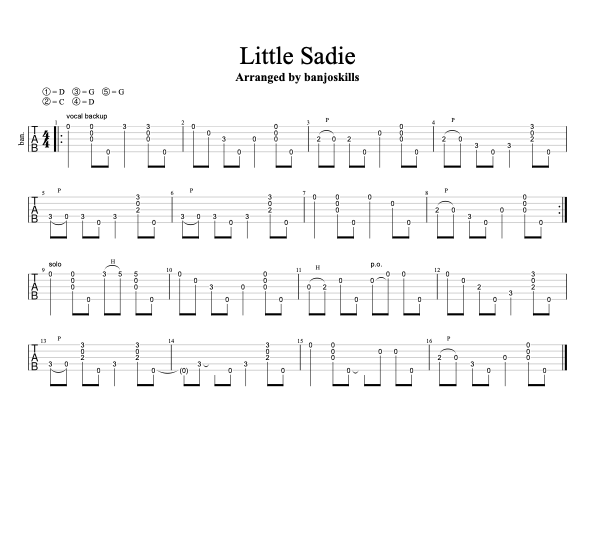
The song is typically played in sawmill tuning, and this arrangement includes both a vocal backup part and an instrumental solo. The vocal backup keeps things simple and lets the singing take center stage, while the solo adds embellishments and shows what you can do with the melody when you have a little more room to stretch out.
Little Sadie Clawhammer Banjo Tab
Get the Free Printable Little Sadie Tab
Download a high-quality, printable PDF version of this tab — free. Keep it on your music stand or take it to your next jam session.
How to Play Little Sadie - Step by Step
Get Into Sawmill Tuning
Little Sadie is played in sawmill tuning (gDGCD). If you’re in standard open G, the only change is tuning your second string up from B to C. Strum the open strings and you’ll immediately hear that darker, modal sound that sawmill tuning is known for.
You can also optionally tune your entire banjo down a half step if you want to sing along and the key feels a bit high. This is a common trick for singing songs. It doesn’t change the fingering at all, just brings everything down to a more comfortable vocal range.
Learn the Vocal Backup
The first two lines of the tab are the vocal backup arrangement. This is the part you’d play while singing, so it’s intentionally kept simple and out of the way. The banjo is there to support the voice, not compete with it.
Play through these two lines slowly and get a feel for the chord changes and the overall shape of the melody. This is the foundation that everything else is built on, so take your time with it. Once you can play the vocal backup smoothly from start to finish, you’ll have a really clear picture of how the song works.
Learn the Solo
The solo is lines three and four of the tab, and it’s essentially a more embellished version of the vocal backup. The chord changes are the same, the overall melodic shape is the same. You’re just filling in more detail now that the banjo has the spotlight.
You’ll find alternate string pull-offs, drop thumb, and m-skips woven throughout the solo. The m-skips are what give it that syncopated, rhythmic punch. If any of these techniques are new to you, isolate the measures where they show up and practice them on their own before trying to play straight through.
Add Embellishments
Once you’ve got both the vocal backup and solo under your fingers, you can start thinking about how to use these techniques more freely. Hammer-ons add a percussive snap. Pull-offs create smooth, flowing lines. Drop thumb fills out the low end and adds rhythmic drive.
The beauty of having both a vocal backup and a solo arrangement is that you can mix and match. Maybe you play the vocal backup version for the first verse and then stretch out into the solo for the instrumental break. That kind of dynamic contrast is what makes a performance interesting.
Make It Your Own
This song is so much fun to play, and there’s a lot of room to make it yours. The tab gives you a solid framework, but don’t treat it as gospel. Try simplifying the solo in spots, or adding embellishments to the vocal backup. Experiment with how much space you leave between phrases. The murder ballad tradition has always been about storytelling, so think of your banjo arrangement as another way of telling the story, with your own voice.
Practice Tips
- 1
Master the vocal backup part first before tackling the solo. The vocal backup is simpler and teaches you the chord changes and overall shape of the song. Once that's solid, the solo will make a lot more sense because it's built on the same foundation.
- 2
Pay close attention to your alternate string pull-offs. Fret the note cleanly, pull off with conviction, and make sure the target string rings out. A sloppy pull-off will muddy up the whole phrase.
- 3
In the solo section, use m-skips to create syncopation. These give the solo its rhythmic punch and keep it from sounding like a straight-ahead melody. Practice the m-skip spots in isolation before playing through the whole solo.
Frequently Asked Questions
What tuning is Little Sadie played in?
Little Sadie is played in sawmill tuning (gDGCD). To get into sawmill from standard open G, you tune your second string up from B to C. It's sometimes called "modal" tuning and gives the banjo a darker, more ancient sound.
What's the connection between Little Sadie and Cocaine Blues?
Johnny Cash's Cocaine Blues was directly based on Little Sadie. The lyrics tell essentially the same story, a man shoots a woman and goes on the run. The melodies have gone their separate ways over the years, but the lyrical connection is unmistakable. Little Sadie is the older of the two by a good stretch.
How hard is Little Sadie?
It's an intermediate tune. The vocal backup part is approachable for advanced beginners, but the solo section uses techniques like alternate string pull-offs, drop thumb, and m-skips that require some experience. If you're comfortable with basic clawhammer and have a few songs under your belt, you're ready to give it a shot.
What's the difference between the vocal backup and the solo?
The vocal backup is a simpler arrangement designed to support singing. It follows the chord progression and outlines the melody without getting too busy. The solo is a more embellished version of that same framework. It adds pull-offs, hammer-ons, drop thumb, and m-skips to fill out the sound when the banjo is front and center.
Do I need to tune down for Little Sadie?
You can optionally tune your whole banjo down a half step to better suit your vocal range. This is a common practice with singing songs. But it's not required. Standard sawmill tuning works perfectly fine, especially if you're just learning the instrumental parts.