How to Play Shady Grove on Banjo - Clawhammer Tab & Lesson
About This Song
Shady Grove is one of the most beloved songs in the Appalachian folk tradition. It's a modal tune with roots that likely go back to the British Isles, though it has been thoroughly adopted by American musicians over the centuries. The song exists in countless variations, with different lyrics and melodies depending on who's playing it and where they learned it.
What makes Shady Grove special is that haunting, minor-key sound that comes from sawmill tuning. It's one of the first songs many players learn when they venture beyond standard open G, and it's a perfect introduction to the darker, moodier side of old-time banjo. The version we're learning here gives you options to simplify or dress it up depending on your comfort level.
Shady Grove Clawhammer Banjo Tab
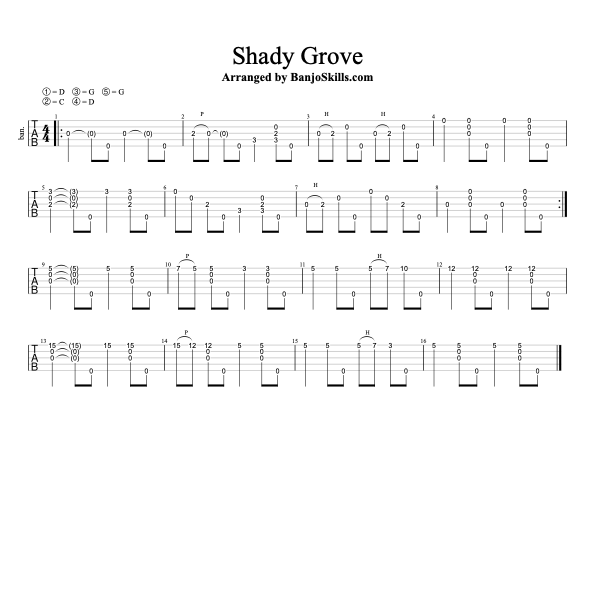
Get the Free Printable Shady Grove Tab
Download a high-quality, printable PDF version of this tab — free. Keep it on your music stand or take it to your next jam session.
How to Play Shady Grove - Step by Step
Get Into Sawmill Tuning
First things first: we need to retune. Shady Grove is played in sawmill tuning (gDGCD). The only string that changes from standard open G is the second string, which goes up from B to C. Use a tuner to bring it up a half step.
Once you’re in sawmill, strum the open strings and listen. You’ll hear that darker, modal sound right away. This is the sound of the mountains, and it’s what makes tunes like Shady Grove so distinctive.
Learn the Basic Melody
The melody of Shady Grove is beautiful and haunting. Play through it slowly, focusing on getting the right notes cleanly. Don’t worry about rhythm or embellishments yet. Just the notes.
This is a melody that really benefits from being in your ear before it’s under your fingers. Hum it, sing it, listen to different versions. The more familiar it sounds to you, the easier it’ll be to play.
Add the Bum-Ditty Rhythm
Now layer in the bum-ditty. Same concept as in open G: melody note, brush stroke, thumb pluck. But you’ll notice the tab also includes m-skips, which are spots where you skip the brush stroke entirely and just play the melody note followed by the thumb pluck. This creates a lighter, more open texture that works beautifully with the mood of the tune.
If the m-skips feel tricky at first, don’t sweat it. Just play a normal bum-ditty in those spots instead. The tune will still sound great, and you can work the m-skips in later once the rest of the arrangement is solid. The tab is not meant to be gospel. It’s a guide, and you should feel free to simplify wherever you need to.
Embellish with Hammer-Ons and Pull-Offs
The tab includes hammer-ons and pull-offs that add ornamentation to the melody. You’ll also see some syncopated notes marked with parentheses in the tab. These fall on the offbeat and give the tune a rhythmic push that keeps it from sounding too straight.
As the arrangement progresses, you’ll notice it ventures up the neck into higher positions. Take these sections slowly. They sound beautiful but they’ll take a little extra practice to get comfortable with.
Same advice as always: add one embellishment at a time. Don’t try to play the full intermediate version right out of the gate. Start simple and layer things in.
Make It Your Own
Shady Grove is a tune that rewards personal expression. Don’t be afraid to mix and match between the simple and intermediate versions. Maybe you play the first time through with a stripped-down arrangement and then add embellishments on the repeat. Maybe you keep certain measures simple forever because you like the way they sound.
There’s no single right way to play this song. As long as that melody is coming through, you’re doing it right. That’s the beauty of old-time banjo. It’s your voice, your interpretation. Make it sound like you.
Practice Tips
- 1
Before you do anything else, get comfortable with sawmill tuning. Play some open strings, strum some chords, and let your ears adjust to the sound. It's going to feel different from open G, and that's the whole point.
- 2
If a measure feels too busy, simplify it. Replace the embellishment with an open string or a basic bum-ditty. The tab gives you an intermediate version, but there's absolutely nothing wrong with stripping it back while you're learning.
- 3
Try mixing simple and intermediate measures together. Play the easy version for most of the tune and drop in one or two fancier measures where you feel comfortable. That's how you build up to the full arrangement naturally.
Frequently Asked Questions
What tuning is Shady Grove played in?
Shady Grove is played in sawmill tuning (gDGCD). The only difference from standard open G is the second string, which goes up from B to C. This gives you that dark, modal sound that defines the tune.
What is sawmill tuning?
Sawmill tuning is gDGCD, also called modal or mountain minor tuning. You get it by tuning your second string up from B to C. It's the most common alternate tuning in old-time banjo and opens up a whole world of moody, haunting tunes.
Is Shady Grove hard to play?
The basic version is very approachable for beginners. The melody is simple and the bum-ditty rhythm does most of the heavy lifting. The intermediate version adds some embellishments and goes up the neck a bit, but you can mix and match based on what feels comfortable.
How do I simplify the harder measures?
Anywhere you see a hammer-on, pull-off, or skip that feels tricky, just replace it with the basic melody note and a standard bum-ditty. The tune will still sound great. You can always add the embellishments back in later as you get more comfortable.
What are m-skips?
An m-skip is when you skip the brush stroke in the bum-ditty pattern and just play the melody note followed by the thumb pluck. It creates a lighter, more open feel. If they're tricky at first, just play the normal bum-ditty instead and add the m-skips in later.