How to Play This Land Is Your Land on Banjo - Clawhammer Tab & Lesson
About This Song
This Land Is Your Land is one of the most recognizable American songs ever written. Woody Guthrie wrote it in 1940 and recorded it in 1944. Since then, it's shown up at presidential inaugurations, school assemblies, and community gatherings across the country. It's a song that just about everyone knows.
On the banjo, This Land Is Your Land works beautifully in open G tuning with just three chords: G, C, and D7. The melody is simple and singable, making it a perfect beginner song. It's also a great tune to play for people who don't know anything about banjo, because everyone recognizes it. You'll be surprised how much fun it is to play a song that gets people singing along.
This Land Is Your Land Clawhammer Banjo Tab
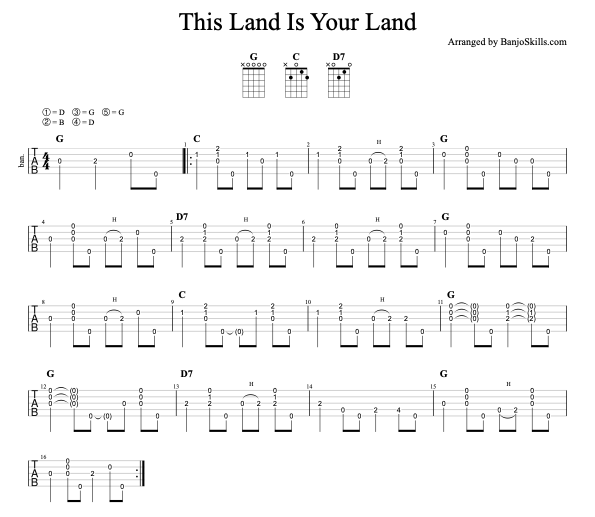
Get the Free Printable This Land Is Your Land Tab
Download a high-quality, printable PDF version of this tab — free. Keep it on your music stand or take it to your next jam session.
How to Play This Land Is Your Land - Step by Step
Get Familiar with the Chords
This Land Is Your Land uses three chords in open G tuning (gDGBD): G, C, and D7. You probably already know them. Check the chord diagrams at the top of the tab for the exact shapes.
The song moves at a relaxed pace, so you have plenty of time to make each chord change. Practice switching between G, C, and D7 until the transitions feel smooth.
Learn the Melody
The great thing about This Land Is Your Land is that you probably already know how it goes. Hum or sing the melody to yourself first, then find those notes on the banjo. The tab lays it all out for you, but having the melody in your ear makes everything click faster.
Follow the tab measure by measure, playing each note slowly and matching it to the melody you hear in your head.
Work in the Hammer-Ons
You’ll notice hammer-ons (marked H) at several points in the tab. These add a little extra momentum and connect melody notes smoothly. They’re not essential to making the song sound good, but they do add polish.
If a hammer-on feels awkward, just play the note normally for now. You can always come back and add them in once the rest of the arrangement is comfortable.
And don’t worry about the syncopation until the rest of the song is sounding really solid.
Bring It All Together
The song structure is straightforward. Play through the whole thing slowly, focusing on smooth chord changes and a steady rhythm. Once you can play it all the way through without stopping, gradually bring the tempo up.
Make It Your Own
This Land Is Your Land is a song that sounds wonderful at any speed and any skill level. Play it slow and let the melody breathe, or pick up the tempo for a livelier feel. Sing along if you’re comfortable. This is one of those songs where the simplicity is the strength. Don’t overcomplicate it. Just let it ring.
Practice Tips
- 1
Learn the melody by singing or humming it first. This is a song most people already know, and that familiarity is a huge advantage. If you can hear the melody in your head, your fingers will follow more easily.
- 2
Focus on the chord changes between G, C, and D7. The D7 shape might be new if you've only played D before. Practice switching to D7 until it feels as natural as the other chords.
- 3
Use the hammer-ons sparingly at first. The basic melody sounds great on its own, so get that solid before you start adding the hammer-ons that appear in the tab.
Frequently Asked Questions
What tuning is This Land Is Your Land played in?
This arrangement is in standard open G tuning (gDGBD). No retuning needed.
Is This Land Is Your Land hard to play on banjo?
Not at all. This is a beginner-friendly arrangement with just three chords (G, C, and D7) and a melody that most people already know. The hammer-ons in the tab add a little flavor, but the tune sounds great even without them.
Who wrote This Land Is Your Land?
Woody Guthrie wrote the song in February 1940. He originally titled it 'God Blessed America For Me' before revising it to 'This Land Is Your Land' by the time he recorded it in 1944.
What's the difference between D and D7 in this song?
The tab uses a D7 chord instead of a regular D. On the banjo, D7 adds the note C to the D chord, which gives it a slightly bluesy, unresolved quality that wants to pull back to G. It fits the feel of this song really well.